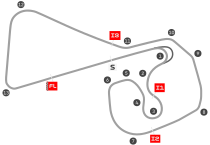
サーキット

Sachsenring

ドイツ東部のザクセン州ケムニッツでは、1920年頃から1990年まで公道を利用した四輪、二輪のレースが伝統的に開催されてきたが、参加者の安全と周辺の人口増加など、公道でのレースが時代にそぐわなくなっていたことから、1996年に入ってから近郊にサーキットを建設。

ドイツでは、1952年から西ドイツGP、1961年から東ドイツGPが開催され、1990年8月に東西ドイツが統一され、以降ホッケンハイムとニュルブルクリンクでドイツGPを開催。1998年に1972年以来16年ぶり、新設のサーキットでは初めてグランプリを開催すると、主にドライビングスクールやライダー&ドライバーたちのトレーニングセンターとして利用される。

2001年に大規模なトラックレイアウトの変更を実施。アップダウンに富み、タイトコーナーが連続する低速コースとして人気が高く、2016年7月、プロモーターのADACドイツ自動車連盟とドルナスポーツとの間で、2017年から5年間の開催に関して合意。8月にはADACドイツ自動車連盟とザクセンリンクの運営会社ザクセンリンク・マネジメントとの間で、契約期間を延長したことから、2021年までドイツGPのザクセンリンク開催が決定。

1998年から2019年まで、毎年7月に開催されていたが、23年連続の開催となる予定だった2020年はパンデミックの影響を受けて中止。

2021年5月、ADACドイツ自動車連盟とドルナスポーツは、ドイツ最大のスポーツイベントの1つを存続させるための長期的な基盤を確立させるため、2026年までの開催に関して合意。2025年7月にはADACドイツ自動車連盟、ザクセン州、ドルナスポーツとの三者間で2031年までの開催に関して契約を締結。

2003年からは毎年20万人を超えるファンが詰めかけ、2023年は観客動員数がドイツで開催された単一のスポーツイベントとしては史上最多となる23万3196人を記録。2024年は25万2826人、2025年は25万6441人を数え、4年連続して前年度の記録を更新。

1961年から12年連続して開催された東ドイツGPを含め、6年連続40回目のイベントとなる2026年はシーズン12戦目として7月10日から12日に開催を計画。

Liqui Moly Grand Prix of Germany Track

カテゴリー別

Category Laps Total Distance Finish in case of red flag
MotoGP™ 30 110.13 Km / 68.43 Miles 23
Moto2™ 25 91.78 Km / 57.03 Miles 19
Moto3™ 23 84.43 Km / 52.46 Miles 17
トラックラップ

サーキットスペック

  • 全長距離

    3.67Km / 2.28 Miles

  • コース幅員

    12m / 39.37ft

  • 最大直線長

    700m / 2296.59ft

  • 右コーナー

    3

  • 左コーナー

    10

Racing has taken place in the area around Chemnitz, Germany since the 1920s. The more modern circuit of Sachsenring, 8km west of the town, was built in 1996 and hosted its first MotoGP ™ race in 1998.

Chemnitz, Germany

The track underwent a significant update in 2001. Its numerous tight corners make it a challenge for MotoGP’s technicians, with a spectacular plunging downhill right-hander nicknamed ‘The Waterfall’ giving riders plenty to focus on. In Germany races attract huge crowds, and the country has produced many talented riders over the years such as Anton Mang, Rolf Waldmann and Dieter Braun. 2011 Moto2 ™ World Champion Stefan Bradl and 2012 Moto3 ™ title winner Sandro Cortese continue the success story in more recent times.

Why we love Germany and Saxony

Germany has undergone great change over the decades, largely since its reunification following the fall of the Berlin Wall in 1989. Of note was its colorful celebration of the FIFA World Cup in 2006, which highlighted so well the country’s modern, multicultural personality. The reinvention and resurgence of Berlin itself has been remarkable over recent decades, and is now one of the most exciting and enthralling of Europe’s great cities. In the heart of the ‘old continent’, Germany’s rich and often turbulent past has left a legacy of artistic, architectural and historical treasures. The contrast between past and present is evident across the country in cities such as Munich, Cologne, Hamburg, Frankfurt, Stuttgart and Düsseldorf, where fine old buildings and museums often sit adjacent to new bars, trendy restaurants, shops and modern art galleries. Throughout the year Germany’s plentiful forests, rivers, lakes and mountains offer great adventures and an ideal escape from big city life. Formerly behind what was once called the ‘Iron Curtain’ during the Cold War years, the state of Saxony is where you will find Sachsenring. It is also home to three sizeable cities which have each undergone great changes of their own over the course of modern times; Dresden, Leipzig and Chemnitz.

Finding the right accommodation

Sachsenring is located near Hohenstein-Ernstthal, a small urban area with a population of around 15,000. However, in the town itself and the surrounding area there are many hotels and guesthouses. Both the cities of Chemnitz and nearby Zwickau have more going on in the evenings than the small towns near Sachsenring, and both have plenty of choices in terms of hotels, guesthouses and rental properties. Dresden and Leipzig provide even more choice in terms of accommodation with a wide selection of hotels suitable for all budgets. Also renting private accommodation, whether it is a house for a week or a city-centre apartment for a few nights, there are good options whereever you choose to base yourself.

Tips for visiting Chemnitz and Saxony

Beer is popular in Germany, and throughout Saxony there are many traditional breweries which have always remained faithful to the sixteenth-century ‘Reinheitsgebot’ - the world’s oldest Purity law. Local beers such as Radeberger and Wernesgrüner come highly recommended by residents and visitors alike, and the Freiberger Brauhaus in Freiberg is the oldest brewery in Saxony, with roots traced back to 1266. The German tradition of ‘Kaffee und Kuchen’ is said to originate in Saxony. Enjoying coffee and cake in one of Leipzig’s many coffeehouses is a fine way to spend an hour or two. Saxon cuisine traditionally features freshwater fish such as carp or trout, whilst potato soup, Blinsen (a pancake) and Klitscher (a potato pancake) can often be found on local menus. The German staples of good quality sausage, schnitzel, roast pork, and of course pretzels, are easy to find throughout Saxony; Greek, Italian and Turkish influences are also evident in modern German cuisine.


観戦券販売中

オフィシャルニュースレター
定期的にメールで配信される動画を含めたコンテンツの受信を希望する場合、オフィシャルウェブにユーザー登録